

Catching my breath
Links, recommendations, and an opportunity to work with me.

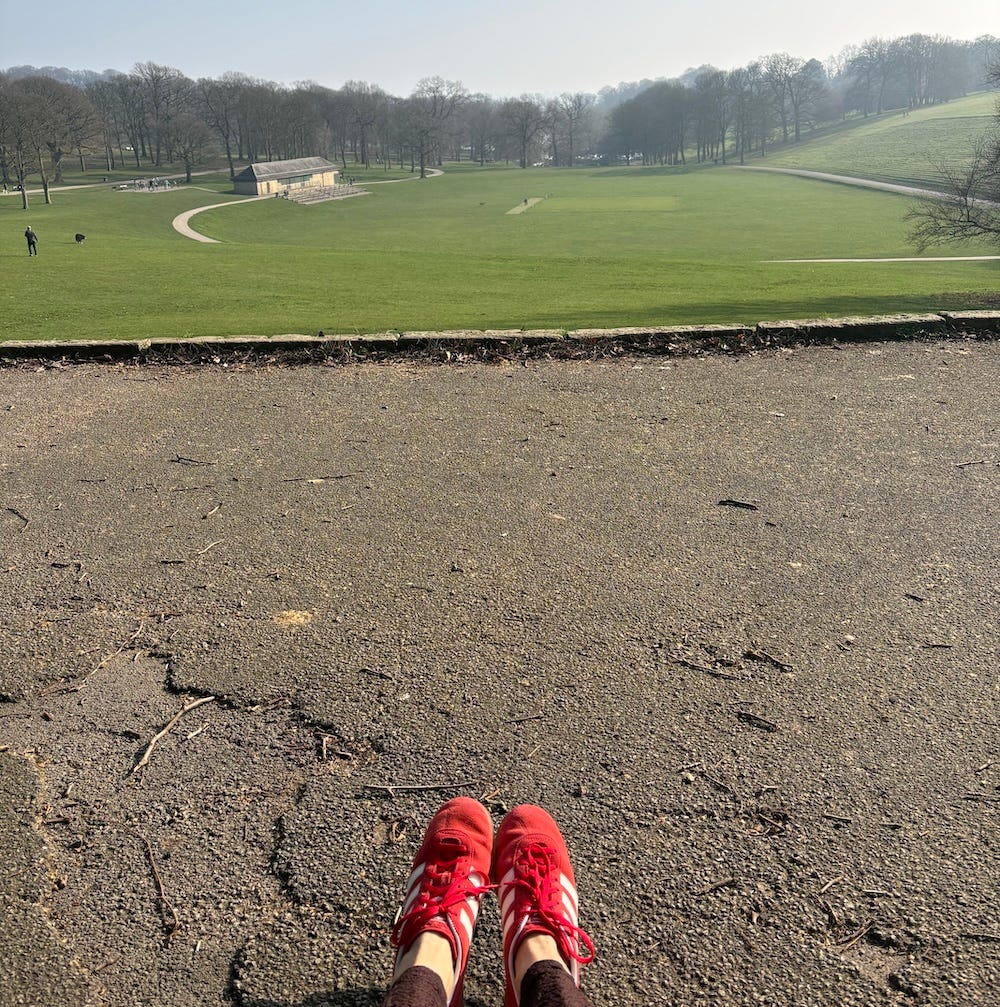
I turned in the first draft of my book manuscript right after Easter, and after a few weeks of catching my breath and sitting in the sunshine, I’m about to embark on the edit and fact check. Before I do, I’m sending this grab-bag of things that I’ve been meaning to share, highlight, and promote. It also includes a hearty list of recommended reading, the likes of which I haven’t sent in ages. (If you’re just here for the links, scroll to the bottom and enjoy.)
As usual, this newsletter audience continues to amaze me with its grace, generosity, willingness to tolerate nuance. My last piece, A Project Will Save You, is now in my top three posts of all time. (It also brought quite a few new subscribers here — welcome.) I wrote it with people who had recently been laid off from full-time employment in mind, or people who might face that fate soon. But I noticed it also landed as a kind of call-of-arms to my fellow creative freelancers, who in reading it seemed to recognize habits and mindsets they’ve perhaps unknowingly been implementing for years.
No matter what camp you fall into, I think it just feels good to know we’re not alone in our valiant commitment to our shared human-ness. Spend some time in the warm and enlightening comments section if you need further proof of that.
One commenter asked a question that I wished I had addressed more directly in the piece. He asked (I think in good faith) what would be the point of creative careers in the event that everyone loses their laptop jobs? If everyone’s cutting back to survive, who’s going to be paying for the products of our creative labor?
Good question. If everything really goes to shit, I can’t think of anyone I’d rather be around than the scrappy and frugal people I call creative collaborators. Because we’re going to need people who are practiced at ground-level networking, at using their hands, at organizing and figuring out creative solutions to problems without a performance review and quarterly budget to back and motivate them. We’re going to need villages — physical networks of in-person support that are well-established and can function outside of the market. Look at the creative and effective resistance to ICE in Minneapolis — which Adam Serwer dubbed “neighborism” — for a recent example of what’s possible when that’s firmly in place.
Many artists, creatives, caregivers, and ordinary folks who live outside of the framework of full-time employment are already doing all of those things right now, today. Those skills will directly translate to whatever comes next. I’m arguing that more of us should join them before we’re forced to.
And on top of all that, to quote Bertolt Brecht: “In the dark times, will there also be singing? Yes, there will also be singing. About the dark times.”
Want to write a non-fiction book proposal?
I’m going to be sharing more about my book-writing process in the coming months, about which I have lots to say! The first part of attempting to get a book deal is writing a non-fiction proposal. When I was writing mine (the second time), I reconnected with a former reporter colleague Hanna Kozlowska, who had just sold her debut non-fiction proposal and was documenting the process on her Substack, The Book Project. (Two of her posts in particular, this one and this one, really unlocked my process when I was stuck.)
Since then, we’ve been in a never-ending Whatsapp exchange of commiseration, encouragement, and the occasional primal scream via voice-note. Now that we’ve both turned in our manuscripts, we decided to take this conversation online in the form of a Substack Live. We’ll be talking about what we learned writing our book proposals, what worked, what didn’t, what was way harder than expected, and what motivated us to finally get it done.
It’s going to take place next week on Wednesday May 6 at 7:30pm UK time (that’s 11:30am PST and 2:30pm EST). If you have specific questions — about agents, formats, the process, how long it took etc. — we’d love to hear them in advance. Please comment below or hit respond to this email. I will send out a link to a recording of our conversation in a future newsletter edition.
Want to work with me?
With some headspace opening up on the horizon, I’m re-launching my consulting practice. This work has evolved organically in the last few years since I quit journalism, and now falls into two distinct categories:
Creative consulting calls for individuals
These calls are available to members of this audience. They are one-time, 90 minute sessions where we can talk about whatever you need help with. Past clients have discussed growing or starting their Substack, getting un-stuck in their creative practice, developing book ideas, getting feedback on a piece of writing, pitching advice, and developing a semi-cohesive personal brand online.
I love these sessions — I feel like I often learn as much as my clients do. They cost £125 or $150, and take place on Zoom. This rate is only available to individuals, not companies. Email me to book: rosiespinks [at] gmail [dot] com.
Editorial strategy for brands and companies under Novelist Studio
I quietly launched Novelist Studio with my husband in January. We’re both former journalists turned copywriters, editorial strategists, and published authors who help brands stand out in the attention economy with human-led storytelling and content that builds genuine connections.
So, if you’re one of the few founders, CEOs, or CMOs that hasn’t turned over your entire content operation to LLMs, get in touch. Call us crazy, but we still believe human beings want to hear stories told by actual humans, and we have combined decades of experience doing just that.
Things I enjoyed reading
When my husband told me I had to read this New Yorker piece about a man breaking into jail, I thought “okay whatever.” When I finally did, I couldn’t stop audibly gasping. A truly incredible story. [New Yorker]
If you’re old enough in internet years to miss longform.org, allow me to suggest it’s less polished 2020s offspring: the r/longreads subreddit. It’s worth checking weekly, as most high-quality longform pieces from across the internet get posted there. This thread in particular resurfaced a bunch of classic longreads I remember being assigned during my student newspaper days, like this one by the great Gene Weingarten which (I warn you) will haunt you for the rest of your days.
Falling in love with someone from another country in your twenties and early thirties? Fun! Sexy! Exciting! Doing the same in your late 30s, 40s, and beyond? Usually pretty fucking complicated. A great piece by Elle Hunt, whose byline I always make sure to follow. [Guardian]
“The more mobile we become, moving across borders and among cities, the more we hunger for the identity that once came from being rooted in place.” [NYT gift link]
What does extreme wealth do to the brain? Nothing good, it sounds like. [NY Mag]
“Around the world, different cultures view [mental illness] in utterly different ways, sometimes with better consequences.” [The Guardian]
Elizabeth Oldfield absolutely nails something that’s been bothering me forever: The increasingly thin, vacant, and smoothed out celebrities on the red carpet are so uncomfortable to look at because, despite all their privilege and access, they don’t look free. They look the opposite. [Fully Alive]
If AI “tools cause atrophy of thought in adults, then we can scarcely overestimate the potential effects on a brain that has not developed those cognitive muscles in the first place.” Get AI out of schools. [New Yorker]
One last thing:
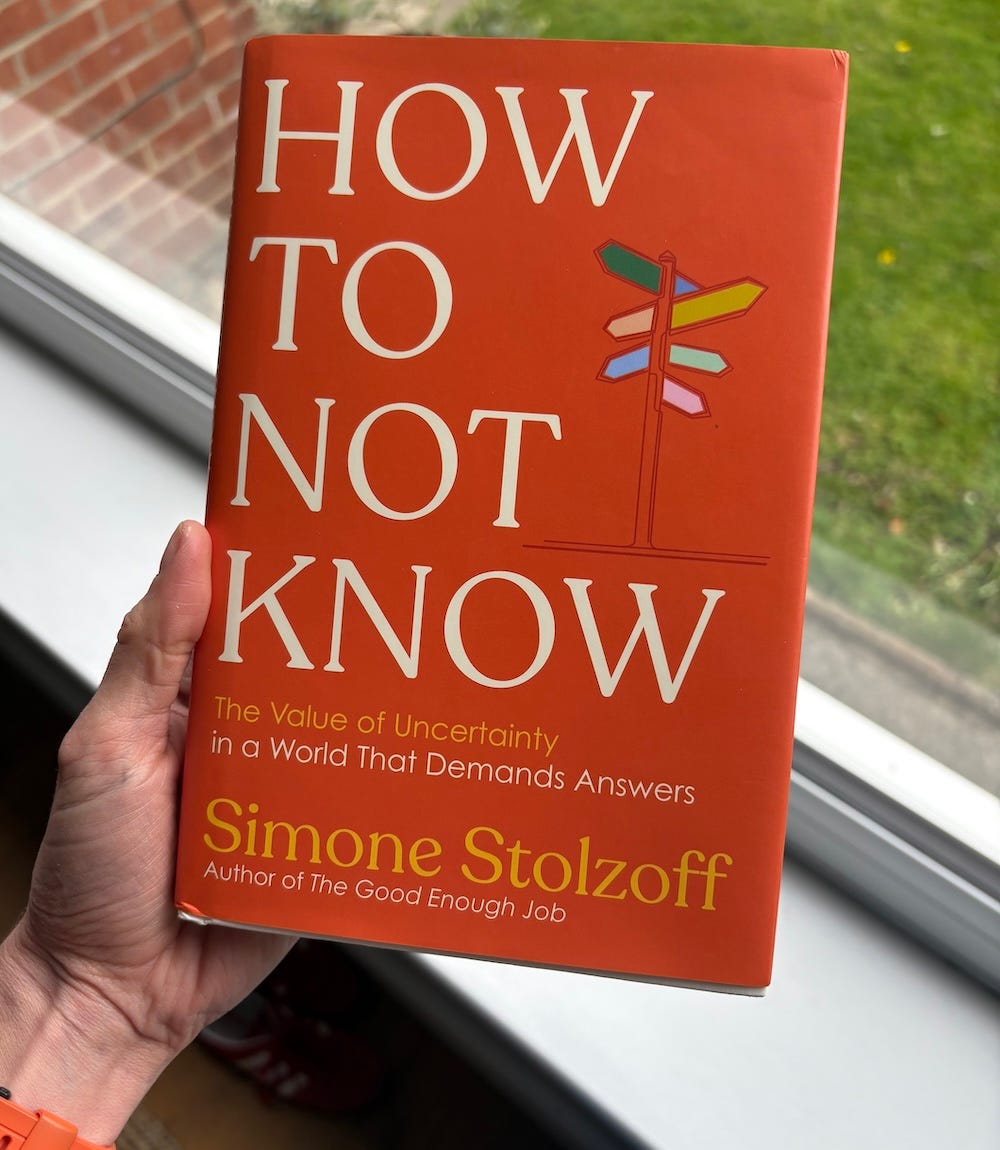
Friend of this newsletter Simone Stolzoff has a new book coming out in May called How to Not Know. I love the book’s idea that increasing our tolerance for uncertainty actually makes us more resilient in today’s world than trying to guess all the answers right. You can read a free chapter of the book here, from Simo’s newsletter The Article Book Club.
Thank you for reading. All of my writing here is offered free to all readers, but if you want to support my work further, the cheapest way is to do that is to upgrade to an annual paid subscription here. Thanks to those of you who already pay to support my work — it means a lot.
Here is what I like - your championing and living into a space that probably is not for everyone. No space is. But when you write about it, you expand for your readers what is possible in the world. The world is always more spacious than we first thought. Thank you for bearing witness to the space we need.
I subscribed after the last post, because I am too getting dismissed, together with all my team, at the end of this year, as our jobs will be sliced into tasks and sent to a cheaper country, before getting automated (it's what it seems like). I thought a long-term contract would bring me stability, and here I am. I am wondering what else I could do with my life, if this is the time to face my fears and not look for another full-time, since even that is not secure as I hoped. I am curious of what I will do, and you are a great inspiration. Very real! I appreciate that. Have a great day!