

Warmly lit from within
A list of links and an ode to Halloween

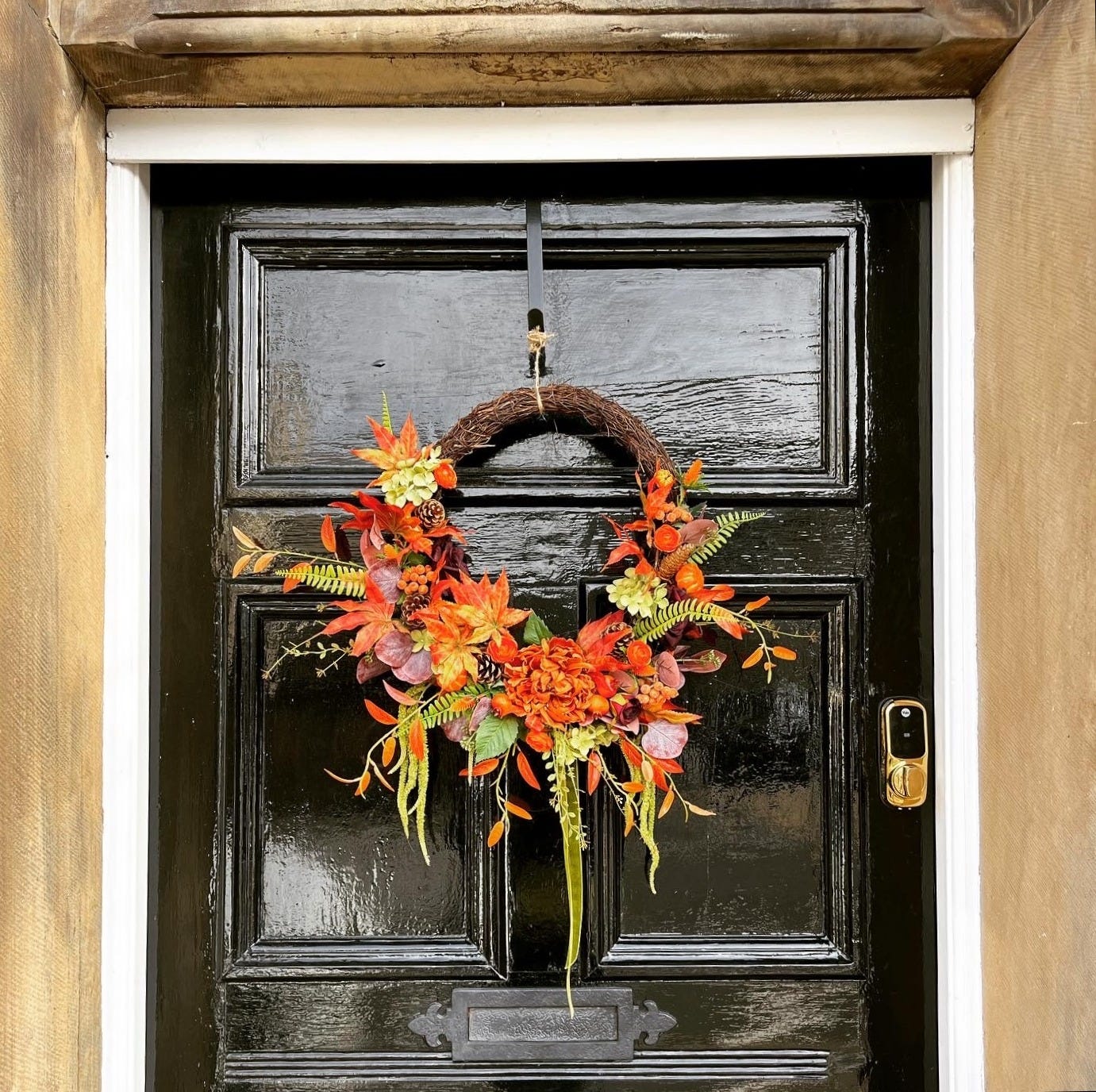
The most American thing about me is that I love Halloween. Fourth of July and Thanksgiving? I haven’t celebrated those in years. But Halloween is one American tradition that I have kept alive in the 15 or so years I’ve lived in the UK.
For the pedants, it may not be quite right to call Halloween American. Its roots are actually in the Celtic, Gaelic, and English folk traditions surrounding Samhain, which is halfway between the autumn equinox and the winter solstice — the cross-over point to the “dark half” of the year. Traditional celebrations involved closing out the season’s harvest, lighting bonfires, honoring ancestors, and I’d guess a fair bit of debauchery.
But nevertheless, the candy-eating, spooky-decorating, costume-wearing iteration of Halloween we’re most familiar with is definitely viewed as an American thing in the UK — often derisively so. However with each passing year, the spooky index creeps up a notch, much to my delight.
Halloween was a big deal in our house growing up. My mom was formerly a Hollywood makeup artist, so our looks were thoroughly extra, and there was often a line of other kids out the door waiting for their Halloween glam. Our neighborhood was the town’s hot spot for trick or treating, and my parents would host a proper party every year. And forget those small plastic pumpkin tubs, my friends and I used to go trick or treating with pillow cases, and then return home to sort and trade our candy like little forensic accountants.
When I grew up and moved to the UK, I couldn’t shake my love for Halloween, but I didn’t really understand why. I didn’t dress up anymore — the American college student tradition of dressing up as a sexy fill-in-the-blank never appealed to me anyway. No one really hosts Halloween parties here, certainly not like my mom did. It’s even hard to find Reeses pumpkins, which are objectively the best candy thanks to the generous peanut butter to chocolate ratio.
Nevertheless, each year, in pretty much every place I lived in, I would dutifully carve a pumpkin and buy a bag of candy from Tesco in the hope that trick or treaters would arrive at my door. Each year, they did, and in greater numbers. And unlike American kids who might meet a single small piece of candy with, “That’s it? No king size?” British children still seem utterly shocked that you can just … walk up to someone’s door and ask for candy (or sweets, rather).
Last year, when my son was approaching two and a half, I hosted a very small toddler Halloween party and took him trick or treating for the first time. Walking from door to door in our neighborhood, I started to realize what I loved and missed about Halloween in my intervening adult years. Why — even when I was a single woman in my twenties with an active social life — I used to make sure I was home from work early enough on Halloween to hand out candy to overly polite British children.
And that’s because, in our culture, Halloween is one of the only days of the year where we actively prioritize the enjoyment of kids in public space. Where adults can express a childlike silliness, mischief, and creativity for the benefit of children — even ones who aren’t their own. Where we get to briefly meet our neighbors at the threshold of their private lives, warmly lit from within. Where we experience hospitality extended outwards, with nothing asked for in return except a cute costume. Where we indulge in the idea that not everything can be proven, that life has some measure of mystery you get to feel rather than see.
Even the death and decay of it all makes more sense to me now. On the face of it, it’s pretty weird that one of my neighbors has a dismembered plastic skeleton peeking out of their front flower bed as if it’s decomposing. But as the leaves fall, the flowers die, and the natural world continues its descent underground for the winter, that skeleton serves as a reminder that at some point, we will all do that, too.
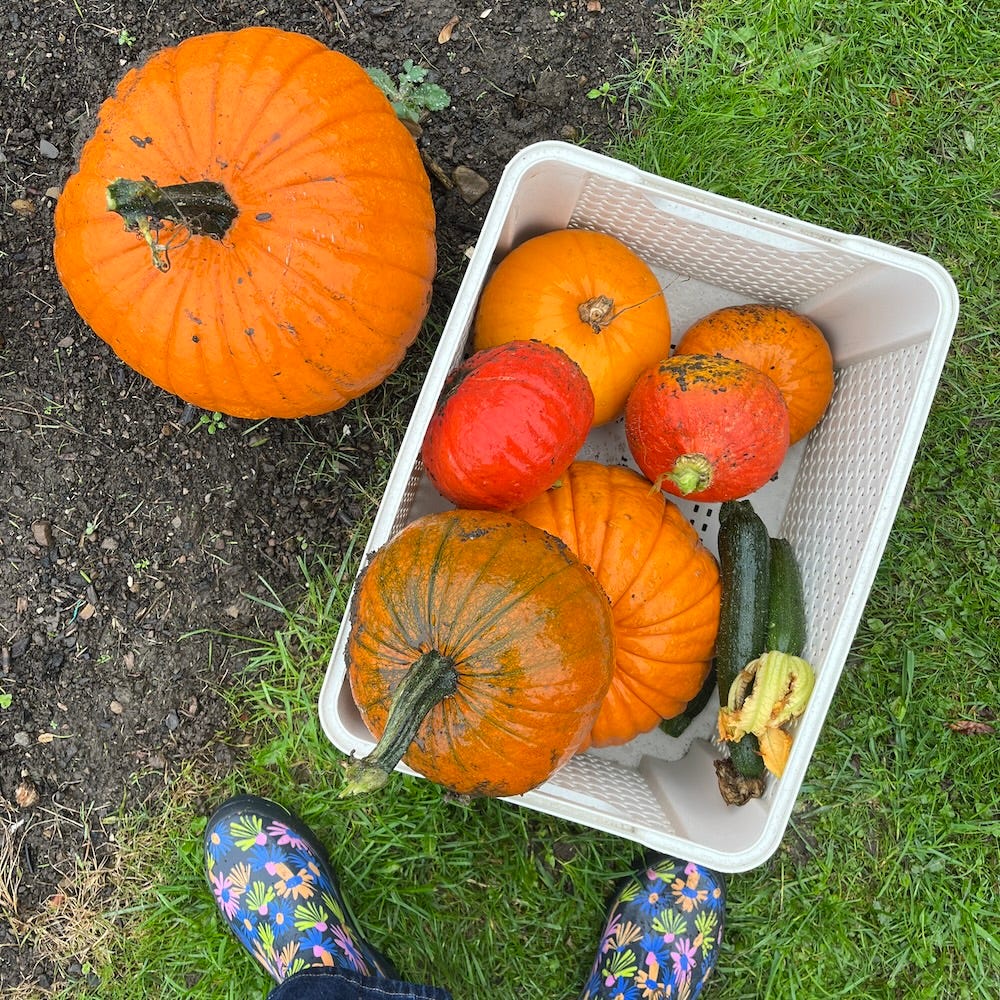
I grew my own pumpkins from seed this year, and watching their progression — from freshly germinated seedling in April to a mature fruit in late September — has felt more grounded in reality than anything I’ve read on the news in the last six months. When I throw the flesh onto the compost pile next week, the whole process will start again.
The older I get, the more unrecognizable the world gets, the less of a cynic I become about these kinds of holidays. Sure, the plastic tat that descends on the retail sector from September to December is a crime against humanity. But that is not the only way to enjoy the dark half of the year. There are plenty of non-consumerist traditions to partake in that our ancestors would have recognized and delighted in as well: the harvesting, the feasting, the trickery, the singing, the gathering, and the sound of kids shrieking in the next room. This is the stuff we’re made to do.
Next week, Halloween falls on a Friday. I’m hosting another party, and hoping it might be as fun for the adults as it will be for the now three year olds. But what I’m looking forward to most is supervising the trick or treating — experiencing that rush of warmth each time a neighbor opens their door.
Two Lives coming up
I’m doing two more Lives before the end of this year. Mostly these are an excuse to hang out with fellow Substackers I know and admire.
and I will be chatting about we can harness the dark half of the year (and perhaps the dark side of life) to fuel our creativity on November 6 at 7:30pm GMT. And in early December and I will be talking about how to find time to write when you are also a caregiver — a topic she has some serious expertise in.Things I enjoyed reading
Why are there so many Netflix films cast with A-list actors that are utterly unwatchable? A great investigation into how so many films got so mediocre. [The Guardian]
“With its Cheesecake Factory outlets and newfound interest in comedy, Saudi Arabia is becoming more American—just as America is becoming more Saudi.”
on the comedy festival in Riyadh is the perfect marriage of writer and subject matter. [The Atlantic]Is AI a bubble? I have certainly had that sense for a while, but my suspicion has been based mostly on vibes. Ed Zitron breaks down the numbers, rather convincingly. Settle in for a very long read. [Where’s Your Ed At]
After a house burns down in a fire, people often say, “it’s just stuff.” But that’s not quite true. A really human story about living in the aftermath of seemingly endless climate disaster. [New Yorker]
Does an official diagnosis help a person feel better? The science (and individual experience) is mixed. [NY Times]
Village links
This is a new little section where I’m just tracking current media related to the topic of the book I am writing: How To Build a Village.
I love this Reddit post from a dad who instituted a rotational movie night after realizing he had no village, and thus needed to build one. The result? “By hosting chaos in our house once per month, my wife and I now get three nights per month to go on a date.” Yep, that’s exactly how you do it. [Reddit]
A New York Times op-ed with a headline that I’ve literally written in this newsletter: “It’s not normal to raise children like this.” [NYT]
The documentary “The Perfect Neighbor” is harrowing to watch, but also an illustration of on the social cohesion that comes from neighborhood kids playing outside. [The New Yorker]
Things I enjoyed listening to
This conversation between Ezra Klein and Ta-Nehisi Coates in the wake of Charlie Kirk’s killing launched a million takes and discourse cycles. Rather than trying to find the winner of the argument, I think it’s a really valuable example of two people treating a disagreement as the beginning of a conversation, not the end. Worth your time if you missed it. [NYT]
Loved hearing Arundhati Roy talk about finding the emotional truth of a story. I can’t wait to read her new memoir. [The Interview]
And in brief: How to read like Terry Gross. This brought me A LOT of joy. [Fresh Air]
Thank you for reading. I keep all my content free for all subscribers, but paying subscribers help me keep writing this thing, so please join them if you can. You can also support me by liking, commenting, or re-stacking this post on Substack, or forwarding it to a friend. Thanks for being here.
Hooray for Halloween! As a child I was obsessed with the depiction of Halloween in American movies and longed for such shenanigans - it might have been ET that laid it out in the most tantalising way - and now my wish has come true! The streets around our primary school go pretty wild for Halloween and it's got bigger and bigger each year, which I'm very happy about, and so are the kids. But the biggest surprise was, as you said, was the warm fuzzy community feel of interacting with our neighbours and experiencing people's generosity and obvious pleasure in making things so fun for kids. (a lot of the adults are clearly really enjoying themselves too!!)
I don’t really get excited about Halloween but I do often think about how it is the only time that I interact with some of the people in my suburban US neighborhood. I know some of my neighbors well but on Halloween I wonder why many of us aren’t out interacting any other day of the year.